India’s Tallest Highway Bridge Almost Ready to Transform Mumbai–Pune Travel
India’s Tallest Highway Bridge Almost Ready to Transform Mumbai–Pune Travel
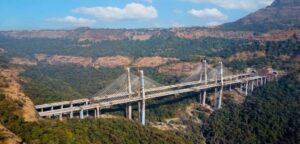
Work on the massive cable-stayed bridge on the Mumbai–Pune Expressway is now in its final stage, with more than 94% of the project completed. The structure, part of the ₹6,690-crore Missing Link project, is expected to be fully open to traffic by April 2026, according to the Maharashtra State Road Development Corporation (MSRDC).
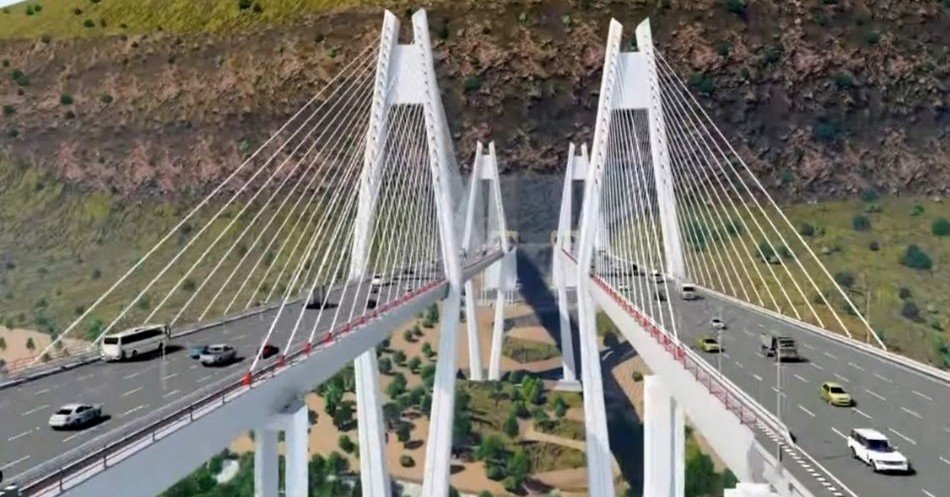
At 182 metres above sea level, the bridge will be India’s tallest cable-stayed bridge—taller than the Bandra–Worli Sea Link towers—and about the height of a 60-storey building. Built deep inside the Sahyadri valley, the project has faced tough conditions, requiring workers to operate at extreme heights on rocky terrain.
MSRDC Joint Managing Director Rajesh Patil called it “one of the state’s most challenging engineering tasks.” Nearly 95% of the bridge structure alone is finished, with the remaining work expected to be completed soon.
A major benefit of the Missing Link project will be the easing of the difficult ghat section between the Khopoli Exit and Sinhagad Institute. The current 19-km hilly stretch will be replaced with a shorter 13.3-km route. This will reduce travel time by 25–45 minutes and lower accident risks on the steep inclines.
The new alignment will also help reduce heavy-vehicle congestion, which frequently causes long bottlenecks in the existing ghat area. With gentler curves and modern safety systems, the upgraded section is expected to offer smoother and safer travel.
Soon: South Mumbai–Thane in just 25 minutes
— MMRDA (@MMRDAOfficial) December 1, 2025
MMRDA has commenced construction of the Elevated Eastern Freeway Extension, a 13.9 km, fully elevated 6-lane high-speed corridor that will dramatically reduce travel time between South Mumbai and Thane to 25–30 minutes, while easing… pic.twitter.com/9vL689iC7U
The bridge itself includes two large cable-stayed spans, together stretching nearly 2 km. Each span is 850 metres long and 26 metres wide, designed for speeds up to 100 kmph. The full eight-lane project includes two tunnels and two viaducts, making it one of India’s biggest highway improvements.
First proposed over 20 years ago as a safer alternative to the old ghat route, the Missing Link plan was revived due to growing traffic. MSRDC, which built the original expressway and the Bandra–Worli Sea Link, is leading the work.
When it opens in 2026, the new link is expected to benefit daily commuters, long-distance travellers, and freight operators with faster travel and reduced congestion.